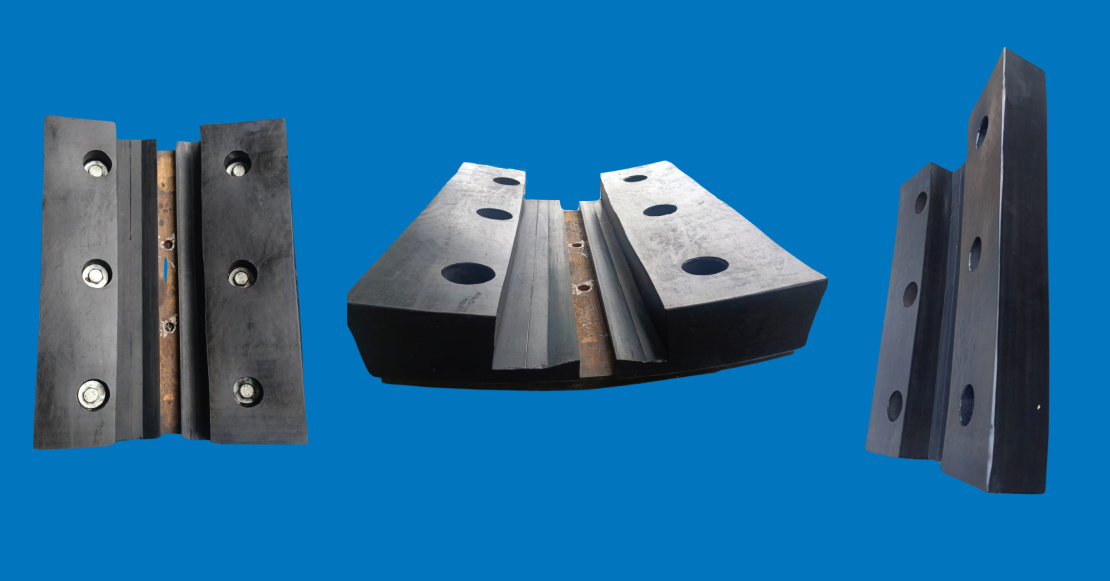
Main Hole Plate Liner
A rubber plate liner, also known as a rubber lifter bar or rubber plate, is an essential component of a ball mill, especially used for wear protection and noise reduction. Here's an in-depth look at the main hole rubber plate liner in ball mills:
Functions and Benefits :-
1. Wear Protection
Rubber liners protect the mill shell from wear and abrasion, prolonging the life of the mill.
They are especially beneficial in mills grinding softer materials or where abrasion is a significant concern.
2. Noise Reduction:
Rubber liners significantly reduce the noise levels of the mill compared to steel liners.
This creates a better working environment and can reduce the need for hearing protection.
3. Energy Efficiency:
Rubber liners can improve the energy efficiency of the mill by absorbing energy from impacts and transferring it more efficiently to the grinding media and material.
4. Impact Resistance:
Rubber liners can withstand high-impact forces and are resilient against deformation, making them suitable for high-intensity grinding processes.
5. Maintenance:
Rubber liners are lighter than steel, making them easier to install and replace.
They generally require less maintenance and can be replaced in sections, reducing downtime.
Design and Material
1. Material:
High-quality rubber compounds are used, often with added reinforcement materials to enhance durability and performance.
These rubbers are typically formulated to resist chemicals, heat, and abrasion.
2. Design:
The design of rubber liners can vary based on the specific application and mill type.
Common designs include lifter bars, shell plates, head plates, and grate plates.
The main hole rubber plate liners are typically customized to fit the specific dimensions and configuration of the mill.
3. Installation:
Rubber liners are typically bolted or bonded to the mill shell.
The installation process involves precise alignment and secure fastening to ensure they stay in place during operation.
Applications
1. Industrial Applications:
Used in various industries, including mining, cement, and chemical processing, where ball mills are employed for grinding.
Suitable for both dry and wet grinding processes.
2. Compatibility:
Rubber liners are often used in mills with a high degree of abrasion or impact.
They are compatible with different grinding media, including steel balls and ceramic media.
Performance Considerations
1. Liner Thickness:
The thickness of the rubber liner affects its durability and impact resistance.
Thicker liners offer better protection but may reduce the internal volume of the mill slightly.
2. Liner Profile:
The profile of the rubber liner (e.g., the shape and height of lifter bars) impacts the motion of the grinding media and the efficiency of the grinding process.
Different profiles can be used to optimize the milling process for different materials.
3. Maintenance Schedule:
Regular inspection and maintenance of rubber liners are essential to detect wear and tear early and replace worn-out sections promptly.
Conclusion
Rubber plate liners in ball mills offer several advantages, including reduced noise levels, improved energy efficiency, and enhanced wear resistance. Their lightweight nature and ease of installation make them a popular choice for many milling applications. However, regular monitoring and maintenance are crucial to ensure optimal performance and longevity of the liners.